
The story of Hungarian immigrants did not end at the dock—it continued through the generations as families became, in time, Hungarian-American. That long process of assimilation reshaped names, language and identity, and it left fingerprints all over the records you will search. Understanding how and why your family changed as it settled is both a moving part of the family story and a practical aid to research, because so many genealogical puzzles trace back to the choices of assimilation.
The changing of names
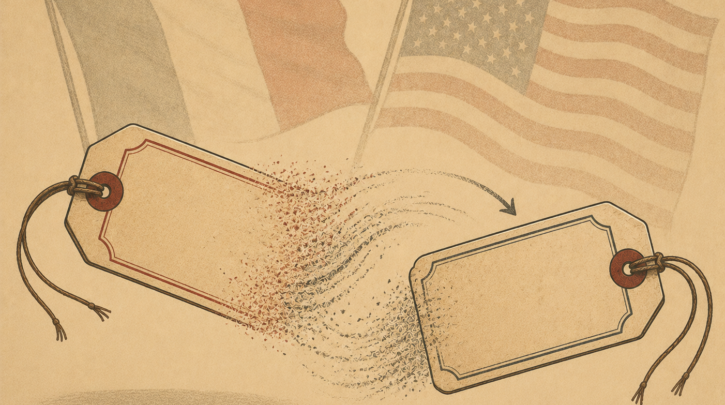
Among the most visible changes was the name. As our Ellis Island guide explains, names were not changed by officials on arrival—they changed gradually and voluntarily afterward. Hungarian surnames were respelled to suit English pronunciation (Kovács to Kovach, Szabó to Sabo), occasionally translated (Kovács, “smith,” to Smith), and the surname-first order was reversed to Western order. Given names were anglicised—István to Steve, György to George, Erzsébet to Elizabeth. For the genealogist, the American name is a clue to, not a copy of, the Hungarian original.
Not sure where to start with your Hungarian ancestry?
Get the Hungarian Genealogy Quick-Start Checklist — a 6-step path to your first real ancestor record, plus how to work out which of six countries holds your family’s records today. No subscription required.
The loss of a difficult language
Language often faded over three generations in a familiar pattern: the immigrants spoke Hungarian; their children were bilingual; their grandchildren frequently spoke only English. Hungarian’s difficulty—it is unrelated to the surrounding English and German and Slavic languages, a Uralic tongue with a complex grammar—made it especially hard to maintain across generations once daily use declined. The result is that many Hungarian-American families lost the language within living memory—a loss with a particular sting for those who later wish to pursue citizenship, which requires it, and one of the most poignant and reclaimable parts of the heritage.
Identity across generations
Hungarian immigrants’ sense of identity was layered from the start—many thought of themselves in terms of their village, their region, their religion, and their place within the multi-ethnic Kingdom as much as “Hungarian” in the modern national sense. In America a Hungarian-American identity formed, sustained by the churches, societies and neighbourhoods, and later refreshed by the arrival of the 1956 refugees. Over time, as generations intermarried and moved out of the old neighbourhoods, Hungarian identity for many became a proud but partial inheritance—celebrated through food, a few words, and family story even where the language and the specific village had been forgotten.
Recovering the original Hungarian name, the religion and the village is the genealogist’s task—and the gateway back. The immigrant-ancestor guide and the research guide show how.
Why assimilation matters for research
Nearly every distinctive challenge of Hungarian-American genealogy grows out of assimilation. The anglicised, reordered name that hides the original; the lost language that left no one to ask; the family that no longer remembered the village or even the religion—each is a research obstacle with assimilation at its root. The flip side is that understanding the process points you to solutions: look for the original name in the original order, expect the three-generation language shift, recover the religion, and treat the immigrant generation’s own records as the truest record of who the family was before it changed. In recovering those facts, many descendants find they are also beginning to reclaim what assimilation set aside.
The three-generation pattern
Sociologists have long observed a pattern in immigrant assimilation, and Hungarian-American families fit it closely. The immigrant generation typically kept the Hungarian language, religion and customs, lived in the ethnic neighbourhood, and often intended to return home. Their children, born or raised in America, grew up bilingual and bicultural, balancing the old world at home with the new world at school and work. Their grandchildren were usually fully American, frequently monolingual in English, and connected to the Hungarian heritage mainly through family, food and a proud but partial memory. Recognising where your family sits in this pattern helps you anticipate what records and language to expect in each generation.
The pattern has direct research implications. The immigrant generation’s records are the most likely to preserve the original Hungarian name, the religion and the village; the second generation’s records show the transition, with names anglicising and origins sometimes already blurred; by the third generation, the specific Hungarian facts may survive only as half-remembered family lore. This is why the immigrant generation is the bridge, and why recovering their records accurately is the key task of Hungarian-American genealogy.
Reclaiming what was set aside
Assimilation was, for most families, a necessary adaptation—the price of building a life in a new country—but what one generation set aside, a later one can choose to take up again. The original name, the lost language, the forgotten village, the specific religion and region: all of these can be recovered through research, and many descendants find that tracing the family becomes the first step toward a fuller reclaiming of their Hungarian heritage. For some that means simply knowing and honouring the story; for others it extends to learning Hungarian, visiting the ancestral village, or pursuing citizenship. The assimilation that once obscured the heritage need not be the end of it—and understanding that process is, in itself, the beginning of recovering what it set aside.