
Not every member of the Hungarian diaspora left Hungary. Millions became part of it without ever moving, because in 1920 the Treaty of Trianon moved the borders out from under them. Understanding this is essential to Hungarian genealogy and heritage, because it shaped where your ancestral village ended up, where its records are held, and—for many people—whether they may qualify for Hungarian citizenship today.
How Trianon created a diaspora without emigration
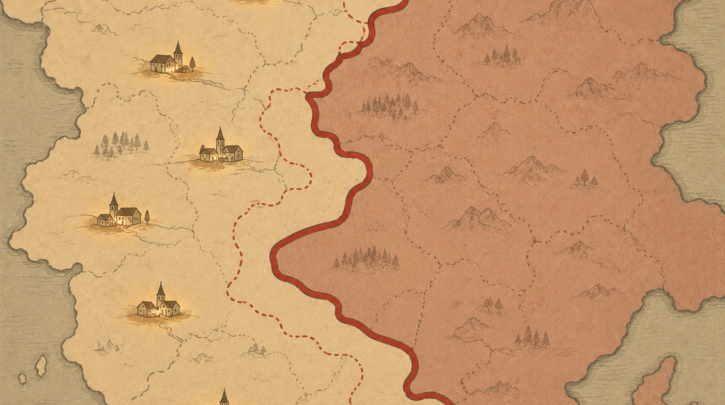
After the First World War, the Treaty of Trianon (1920) stripped the Kingdom of Hungary of about two-thirds of its territory and population. In a single stroke, around three million ethnic Hungarians found themselves living in new countries—Romania, Czechoslovakia, Yugoslavia, Austria—without having moved at all. The largest groups were the Hungarians of Transylvania (now Romania), southern Slovakia (the Felvidék), the Vojvodina (now Serbia) and Carpathian Ruthenia (now Ukraine). These communities, and their descendants, remain a vital part of the Hungarian nation to this day.
Not sure where to start with your Hungarian ancestry?
Get the Hungarian Genealogy Quick-Start Checklist — a 6-step path to your first real ancestor record, plus how to work out which of six countries holds your family’s records today. No subscription required.
What it means for your genealogy
If your family lived in one of the detached territories, the consequences for research are direct:
- Your ancestral village is now in a successor country under a different name.
- Its records may be held in that country’s archives—though many were filmed by FamilySearch.
- Your relatives may have stayed (becoming part of the Hungarian minority in that country) or emigrated later, sometimes under pressure.
This is why the Trianon story is woven through all of Hungarian research: it is the reason “finding the village” comes with the second step of “finding which country it is in now.”
The diaspora and citizenship
The Trianon diaspora is also central to Hungary’s modern citizenship policy. Since 2011, the simplified naturalization process has been deliberately aimed at reconnecting with ethnic Hungarians beyond the borders, allowing descendants of citizens of the pre-1920 Kingdom of Hungary to claim citizenship—subject to proving descent and demonstrating Hungarian language ability. Hundreds of thousands of ethnic Hungarians in Romania, Serbia, Ukraine and elsewhere have done so. If your ancestors lived in a Trianon territory, this history may bear directly on your own eligibility.
If your roots lie in a Trianon territory, the village-location guide shows how to find the records, and the citizenship guide explains what the descent rules may mean for you.
A nation larger than its borders
The enduring lesson of Trianon for the family historian is that the Hungarian nation has long been larger than the Hungarian state. Your “Hungarian” ancestors may have been Hungarians of Transylvania or the Felvidék, part of communities that kept their language and identity for generations under other states. Recognising this widens the search—into Romanian, Slovak, Serbian or Ukrainian archives and place names—and it deepens the heritage, connecting you not just to a country but to the broader story of a people dispersed by the redrawing of a map. It is a story this site helps you trace, wherever the borders have placed your village.
Living as a minority across the borders
The communities left beyond the borders by Trianon did not simply disappear into their new states; many preserved their Hungarian language, religion and identity across generations, sometimes through considerable difficulty. The Hungarians of Transylvania, the Felvidék in Slovakia, the Vojvodina and Carpathian Ruthenia maintained churches, schools and cultural institutions, and remained conscious of their connection to the Hungarian nation even as they became citizens of Romania, Czechoslovakia, Yugoslavia or, later, Ukraine. For descendants, this means a family may have remained “Hungarian” in language and identity for a century while living, on paper, in another country.
This continuity is why so many people with roots in the detached territories find living relatives and intact communities when they research—and why the records, though now in successor-state archives, often remain rich. It also explains the layered identity you may encounter in your family: ancestors who were Hungarian by language and culture, Romanian or Slovak or Serbian by citizenship, and conscious of belonging to a nation larger than any single state’s borders.
Trianon’s long shadow
More than a century on, Trianon remains one of the most consequential events in Hungarian history, and its shadow falls across genealogy in practical ways. It determines which archive holds your village’s records and under what name; it shaped twentieth-century migrations as borders shifted again through the Second World War and the communist era; and it underlies Hungary’s modern citizenship policy, with its deliberate reach toward the descendants of the pre-1920 Kingdom. For the family historian, understanding Trianon is not optional background—it is the framework that explains where your family’s records are, why your village changed names, and how the broad story of a nation dispersed by a treaty connects to the specific story of your own ancestors and the village this site helps you find.