
AncestryDNA and MyHeritage are the two autosomal tests worth taking seriously for Hungarian research, and most comparisons stop at database size and price. That misses the variable that actually decides which one serves you better: where your ancestral village sits today. Instead of another generic feature table, here are two real research scenarios — one village that never left Hungary’s borders, one that did — and how each platform actually performs once you are inside it, matching real relatives against real records.
Case Study 1: a village that stayed in Hungary
The scenario: a family researching an ancestor from a village in Csongrád-Csanád County, on the Great Hungarian Plain — a region that has remained inside Hungary’s borders continuously since before the 1920 Treaty of Trianon and every subsequent border change. The family knows the village name, has a rough emigration date around 1905, and is trying to find both the American side of the family (descendants of siblings who stayed in the U.S.) and, ideally, confirmation of the exact parish for baptismal records.
How AncestryDNA performs here
This is close to AncestryDNA’s ideal case. Because the family emigrated as part of the Great Hungarian Migration and settled in an industrial U.S. city, the overwhelming majority of living descendants — the second and third cousins who could hold old photographs, family Bibles, or oral history — are themselves American, and Ancestry’s sheer North American testing volume puts more of them in reach than any other platform. ThruLines picks up shared family trees quickly in this scenario, since American-side researchers are more likely to have built out a tree on Ancestry already, and matches typically carry U.S. locations, occupations, and census records attached — useful corroborating detail even before you touch a single Hungarian-language document.
How MyHeritage performs here
MyHeritage still returns matches in this scenario, but with a different shape: fewer matches overall, and a smaller share of them with a built-out tree to compare against, simply because its user base skews more international and less saturated with this specific Hungarian-American diaspora population than Ancestry’s does. Where MyHeritage adds real value even here is the free upload option — transferring the same AncestryDNA raw file in costs nothing and occasionally surfaces one or two matches still living in Hungary itself, which can be the fastest route to confirming the exact parish, since a Hungary-based cousin may already know the village’s current church or civil registration office by name.
Case 1 verdict
For a village that never crossed a border, AncestryDNA wins as the primary test. The diaspora-heavy match pool and stronger tree-hint volume do the most work fastest. Upload the raw file to MyHeritage afterward as a low-cost second pass, mainly to catch the rarer Hungary-based match rather than as your main strategy.
Case Study 2: a village now in Romania or Slovakia
The scenario: a family researching an ancestor from a village in historic Bihar County — a county that was split by the 1920 border, with the eastern portion now part of Bihor County, Romania. The family has only a county-level guess at origin, no confirmed village, and needs to work out which side of the modern Hungary–Romania border the specific parish sits on before they can request any records at all. (The same dynamic applies to a village in historic Nyitra County, now Slovakia’s Nitra Region — the mechanics below work the same way regardless of which successor state is in play.)
How AncestryDNA performs here
This is where AncestryDNA’s core strength stops being decisive. Its match pool is still large, but it is disproportionately North American and Western European, meaning a cousin who stayed behind in a Romanian or Slovak village — exactly the person most likely to know which side of the border the family actually sits on — is statistically less likely to appear in the results at all. Ancestry’s record-hint system is also concentrated in U.S., UK, and Canadian collections; it will readily surface a great-grandfather’s Ellis Island manifest but has little to offer once the research question becomes “which country’s archive holds this parish’s records today.”
How MyHeritage performs here
This is the scenario MyHeritage is built for. Its more international, more Central-and-Eastern-European user base meaningfully raises the odds of matching a cousin who is still living in Romania or Slovakia, or whose family tree lists a current address in one of the successor-state Hungarian communities — a match like that can effectively answer the “which country” question directly, in a way no ethnicity estimate can. MyHeritage’s chromosome browser also becomes genuinely useful here rather than a nice-to-have: confirming a shared DNA segment with a border-region match is worth doing before you invest time contacting an unfamiliar country’s archive system based on a tree hint alone.
Case 2 verdict
For a village now outside Hungary, MyHeritage wins as the primary test. Test at Ancestry if you already have a kit, but treat the free MyHeritage upload as the essential second step, not an optional one — it is the platform most likely to put you in contact with someone who already knows the answer. Once you have a country-level hypothesis from a match, confirm it against which country your ancestral village is in now before contacting any archive.
Side-by-side summary
| Case 1: village stayed in Hungary | Case 2: village now in Romania/Slovakia | |
|---|---|---|
| Best primary test | AncestryDNA | MyHeritage |
| Why | Largest pool of U.S. diaspora cousins and tree hints | Higher odds of a match still living in the successor state |
| Record hints | Strong for U.S./Canada arrival and census records | Weak on-platform; use matches to point toward the right country archive instead |
| Recommended second step | Free MyHeritage upload, to catch a rare Hungary-based match | Confirm any promising match against local records before contacting an archive |
Why testing on both still makes sense either way
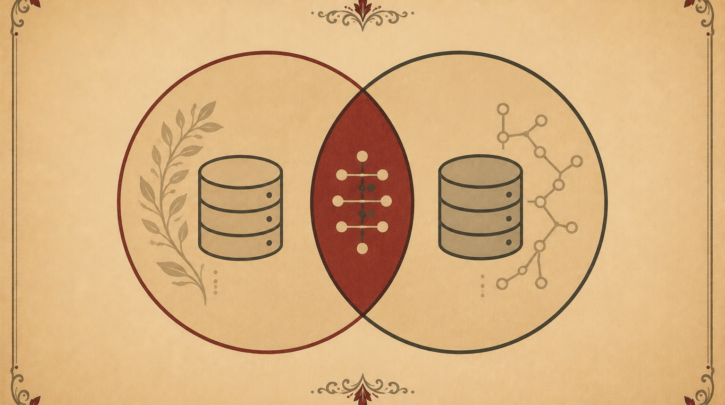
Neither case study argues for choosing only one platform — it argues for choosing which one to prioritize first. Because uploading an AncestryDNA raw file to MyHeritage is free, the practical strategy in both scenarios is the same: test where your primary hypothesis says the answer is more likely to live, then upload to the other platform at no extra cost to catch what the first one misses. A match that appears in both databases, or a hypothesis two independent match pools both support, is more trustworthy than either result alone — and for a family straddling the Trianon border specifically, the second pool is where the harder-to-find, still-local relative often turns up.
Ethnicity estimates: not the deciding factor in either case
Neither platform’s ethnicity percentage resolves either case study above — as explained in understanding Hungarian DNA ethnicity results, the modern Hungarian gene pool overlaps too heavily with its neighbors for a tidy “Hungarian” reading, and that overlap is if anything more pronounced in border regions like Bihar or Nyitra County, exactly where the second case study sits. Treat the ethnicity report as background color in both scenarios; the match list and, ultimately, the documentary records are what actually answer the research question.
Turning a match into a confirmed line
In both case studies, a promising match is a lead, not a conclusion. For the Hungary-based case, that usually means requesting parish or civil registration records directly through Hungary’s own archive system. For the successor-state case, it means first verifying the modern country and then approaching that country’s own archive — see heritage across the borders for the country-specific starting points, and researching Hungarian archives in person if a visit ends up being the only way to access a specific record. Either way, the workflow for turning a DNA match into a documented line is the same one covered in connecting DNA matches to Hungarian records.
Our recommendation, by case
- Village confirmed and always inside Hungary: test with AncestryDNA first for the diaspora match volume, then upload free to MyHeritage as a low-effort second pass.
- Village uncertain, or known to now sit in a successor state: prioritize MyHeritage first for the higher odds of a still-local match, and treat AncestryDNA as the secondary, diaspora-focused pool.
- Not sure which case you’re in yet: that uncertainty is itself the answer — start with finding your ancestral village to narrow it down before spending money on a specific platform.
Current kit pricing, discount windows, and the upload walkthrough for both platforms are kept up to date on our Hungarian DNA hub.
Privacy, regardless of which case you’re in
Both companies let you download your raw data and delete your account, and both have had to address public questions about how genetic data is stored and shared. Whichever platform you prioritize based on the case studies above, take five minutes to review its current privacy and research-consent settings before testing — the broader industry’s upheaval, most visibly at 23andMe, is a reasonable prompt to treat this as a routine step rather than an afterthought.